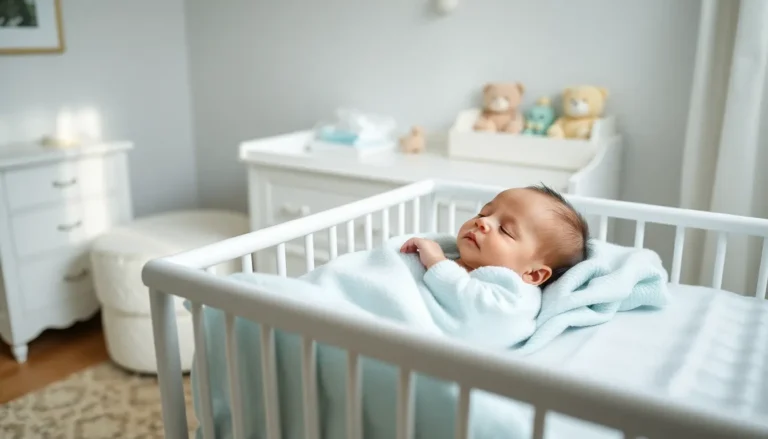
Newborns arrive in the world with a mystery wrapped in a tiny blanket, and one of the biggest questions new parents have is, “When will my baby’s eye color finally make its grand debut?” It’s like waiting for a surprise party that you didn’t even plan! Initially, those baby blues or browns might be hidden behind a veil of grayish tint, leaving parents guessing and wondering if their little one will inherit their striking green eyes or their partner’s deep chocolate hues.
As weeks turn into months, the suspense builds. Eye color isn’t just a genetic lottery; it’s a fascinating journey influenced by melanin and time. So, let’s dive into the colorful world of baby eye color and unveil the timeline of when those peepers start to show their true shades. After all, who doesn’t want to know when to start coordinating outfits with their newborn’s sparkling eyes?
Table of Contents
ToggleUnderstanding Eye Color In Newborns
Eye color in newborns primarily results from genetic inheritance and melanin production. Initially, most babies display a grayish or blue tint, caused by a lack of melanin in the iris. Colors start changing almost immediately after birth due to the increasing production of melanin, leading to variations in eye color.
Two main genes, OCA2 and HERC2, significantly influence eye color. Genetic combinations passed from parents determine the eventual shade. By around six months of age, many infants begin to reveal their true eye color, as melanin continues to develop in the iris.
Some newborns may experience changes up to three years old, as eye color may shift due to ongoing melanin production. Certain hues, such as brown and green, typically emerge earlier, while blue and gray shades might take longer to stabilize.
Parents often observe this gradual transformation, eagerly awaiting the moment their child’s definitive eye color becomes apparent. Families with a diverse genetic background often see a wider range of potential shades, influenced by heritage and lineage. Research shows that about 75% of Caucasian infants are born with lighter blue or gray eyes.
Despite anticipations, surprises can occur as eye colors may eventually change even into adolescence, especially in cases of hazel or green shades. Genetic and environmental factors intertwine to create the unique eye characteristics seen in each individual.
The Science Behind Eye Color
Understanding the science behind eye color involves genetics and the role of melanin. Both factors contribute significantly to the hues observed in newborns.
Genetics and Eye Color
Eye color is determined primarily by genetic factors, with OCA2 and HERC2 genes playing crucial roles. These genes influence melanin production in the iris, impacting shades from blue to brown. Multiple genetic combinations yield diverse eye colors. Variations in these genes lead to unpredictable outcomes in some infants, leading to surprises for parents. Each family’s genetic background contributes to the spectrum of potential eye colors. New parents may notice traits from both sides of the family, resulting in unique eye color representations.
The Role of Melanin
Melanin production is essential in defining eye color. In newborns, low melanin levels cause the grayish or blue appearance of their irises. This pigment aids in the development of more pronounced eye colors as infants grow. Over time, increased melanin production begins, often revealing a true eye color by six months. Shades like brown emerge quickly due to higher melanin concentrations, with green and hazel appearing soon after. Blue and gray may linger longer as stable colors. Ultimately, the gradual transition relates directly to the individual’s unique biological development.
When Do Newborns Get Their Eye Color?
Newborns begin life with uncertain eye colors, often appearing grayish or blue. This initial appearance stems from low melanin levels in the iris.
Neonatal Eye Appearance
Babies typically exhibit a grayish or blue tint at birth. Most newborns show this color due to a lack of melanin, which is responsible for the pigmentation in the iris. Genetic factors influence this phase, with melanin production gradually increasing over time. Rarely, some infants could inherit darker tints from their parents, but they remain rare in the early days. Expect parents to observe that this grayish tint can deceive them into thinking their child will have a specific eye color.
Changes Over Time
Eye color begins to shift soon after birth. By six months, many infants display their true eye color, reflecting changes in melanin levels. Certain shades, like brown and green, appear more quickly, while blue or gray hues may stabilize later. Changes can continue for up to three years, and surprises often arise. Family history also plays a crucial role, as genetic variations contribute to these unpredictable transformations. Final eye color may not fully stabilize until early childhood, making it a journey of anticipation for parents.
Factors Influencing Eye Color Development
Eye color development in newborns hinges on several factors. Genetic inheritance and environmental influences play significant roles in determining the final shade.
Parental Eye Color
Parental eye color strongly influences a child’s eye color. Generally, children inherit a combination of genes from both parents. Dominant genes often lead to darker hues, while recessive genes may produce lighter shades. For instance, if one parent has brown eyes and the other has blue, the child is more likely to inherit a darker shade. Studies show that 75% of brown-eyed parents will have brown-eyed children. Genetic variations can create surprising outcomes, leading to unique combinations among siblings. Family history often provides insight into potential eye color variations.
Environmental Factors
Environmental factors also contribute to eye color changes in newborns. Exposure to sunlight can influence melanin production over time. Increased sunlight often results in darker eye colors as melanin levels rise. Additionally, nutrition plays a crucial role in eye development. A diet rich in vitamins can support overall eye health, potentially affecting pigmentation. Certain health conditions may also alter eye color temporarily. Babies living in regions with more light exposure may experience quicker changes in eye color than those in darker climates. Understanding these influences helps parents anticipate possible changes.
The journey of discovering a newborn’s eye color can be an exciting experience for parents. While initial shades may appear grayish or blue, the true color gradually emerges as melanin production increases. By six months, many infants reveal their definitive eye color, with some changes potentially continuing for up to three years.
Genetics plays a vital role in this process, influenced by the parents’ eye colors and genetic backgrounds. Environmental factors can also contribute to shifts in eye color over time. Embracing the uncertainty and uniqueness of a child’s eye color journey can enhance the joy of parenthood, as each child’s experience is truly one-of-a-kind.